
Buddhism teaches that existence is impermanent, insubstantial and unsatisfactory. Covid and the conditions of the modern world bring out these underlying patterns, and we need to change our mindset to match reality
As we glimpse the prospect of life after Covid, the debate about what happens next has started in earnest. Most participants agree that, as well as tackling the immediate crisis, we must address underlying, longterm problems with the economy, our mental health and climate change. That’s just the start of a very long list, but there’s another level that’s rarely discussed.
I’m involved in a growing movement of mindfulness practice in parliaments around the world and one of my colleagues recently remarked that politicians are the most stressed people he’s ever met.
We know that, past a certain point, people makes poorer decisions if they’re tired, embattled or overwhelmed. So, if we want better government, we need politicians who can manage the demands, and for many mindfulness is a source of respite. But personal stress is just a symptom. The real aim of mindfulness is creating the metal space that allows us to step back and recognise the deeper patterns of our experience.
According to the Buddhist account of reality, everything we experience is impermanent. That’s true of our minds and bodies, and the world we inhabit. Because things change, they’re elusive and insubstantial; and in yearning for certainty and stability in a deeply uncertain world, we feel a profound sense of what Buddhism calls ‘unsatisfactoriness’. The root of our suffering, Buddhism says, is our desire for things to be permanent, substantial and satisfactory when the world just isn’t made that way.
While that may have always been true, in the modern world technology is accelerating the speed of change and connecting us to ever-more problems. The underlying patterns come closer to the surface, and Covid dramatically shows that we both face perennial threats and feel a new responsibility for addressing them.
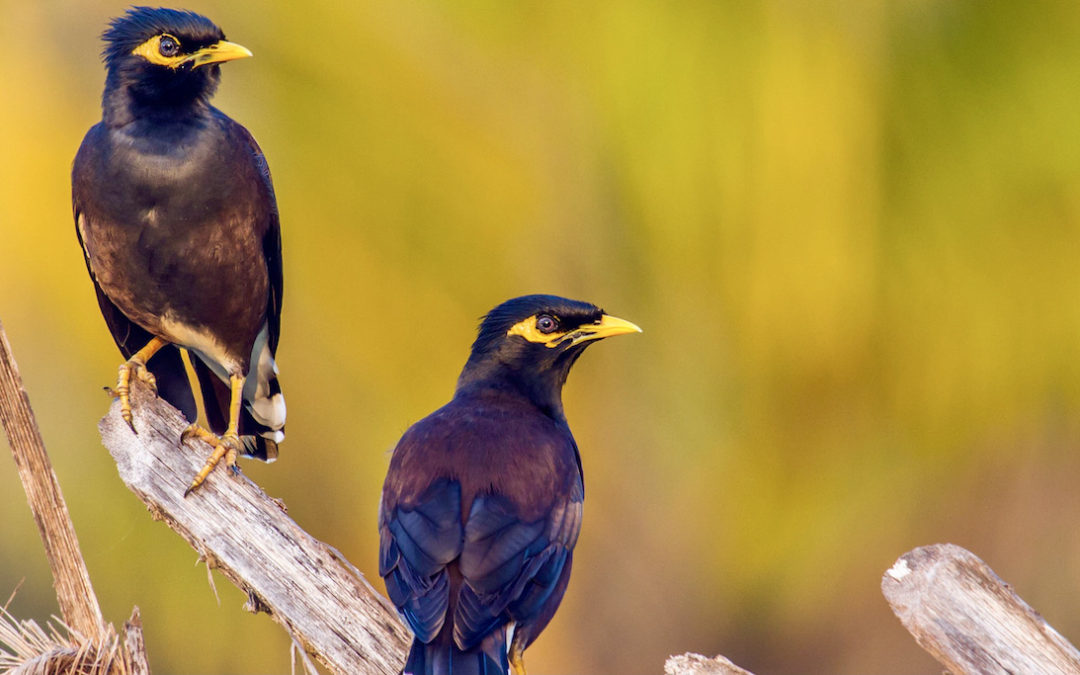
Aldous Huxley's novel Island describes a utopian, Buddhist-influenced society where wild myna birds have been trained to squawk out ‘Attention!’ and ‘Here and now!’ as they fly around. Actual Buddhist practice involves becoming aware of our thoughts and feelings so we can align ourselves with life’s shifting reality, acknowledging our insecurity and loosening our desire for control.
The aim is a wiser response to life’s problems, not just quiet acceptance, and that means looking at our mindsets. I suspect we already know, at some level, that things are impermanent and that we’re at our best when we’re most aware. But I – for one – would love some myna birds reminding me to me to put that into practice.

Hi Vishvapani,
I see you’ve used an image of the Myna bird, Common Hill myna, which appears in a Jataka on three eggs.
Mettā, Viryabodhi